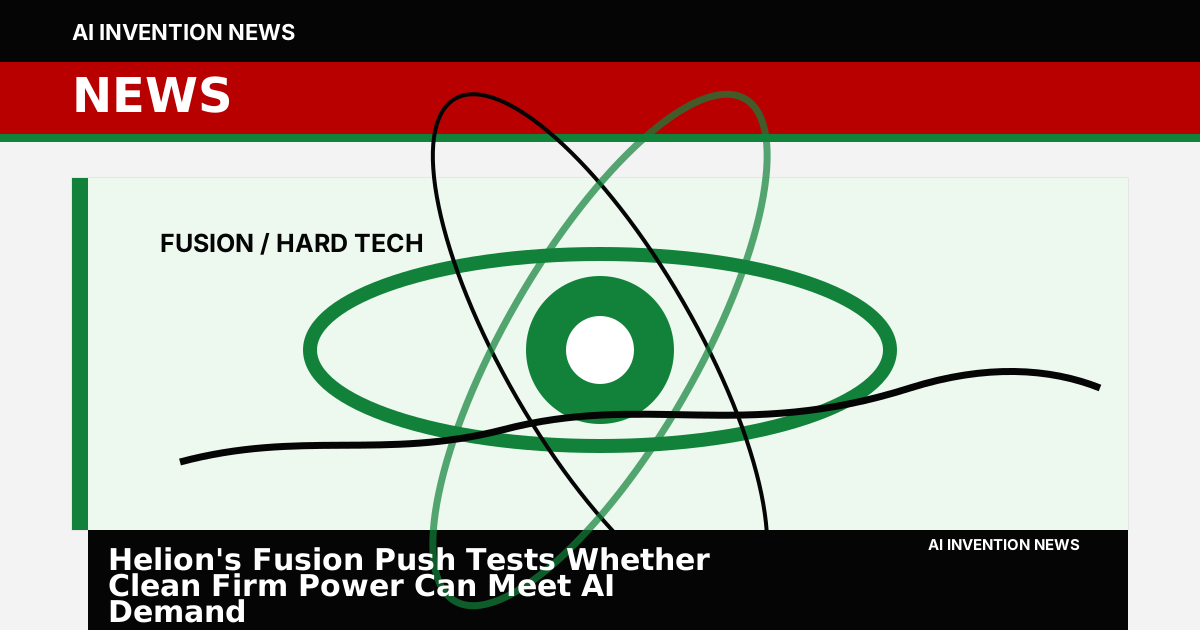
Helion's commercial fusion ambitions are becoming inseparable from the AI power debate. Data centers need electricity that is clean, firm, and available at industrial scale. Solar and wind are essential, but they require storage and grid planning to meet around-the-clock demand. Fusion promises a different profile if companies can make it work: high-output generation with no carbon combustion.
The science challenge remains formidable. Fusion systems must heat fuel to extreme conditions, control plasma behavior, capture energy efficiently, and repeat the process reliably. Helion's approach differs from traditional tokamak designs, emphasizing pulsed operation and direct electricity conversion. That makes its roadmap intriguing, but it also means outside observers will want clear engineering proof points.
The company's latest funding gives it more capacity to build hardware, scale manufacturing, and pursue customer commitments. Microsoft is an important target customer because cloud platforms increasingly view power availability as a strategic constraint. The AI boom has made energy sourcing a board-level technology issue rather than a facilities detail.
Fusion will not solve near-term data-center demand alone. But Helion's progress matters because the next decade of computing may be limited as much by electrons as by chips. If fusion can move from promise to delivery, it could redraw the map for AI infrastructure.
Source context: Helion